18: Our Ramsey Story, Part 2: Spies, Cash, Fear and Rich People Habits
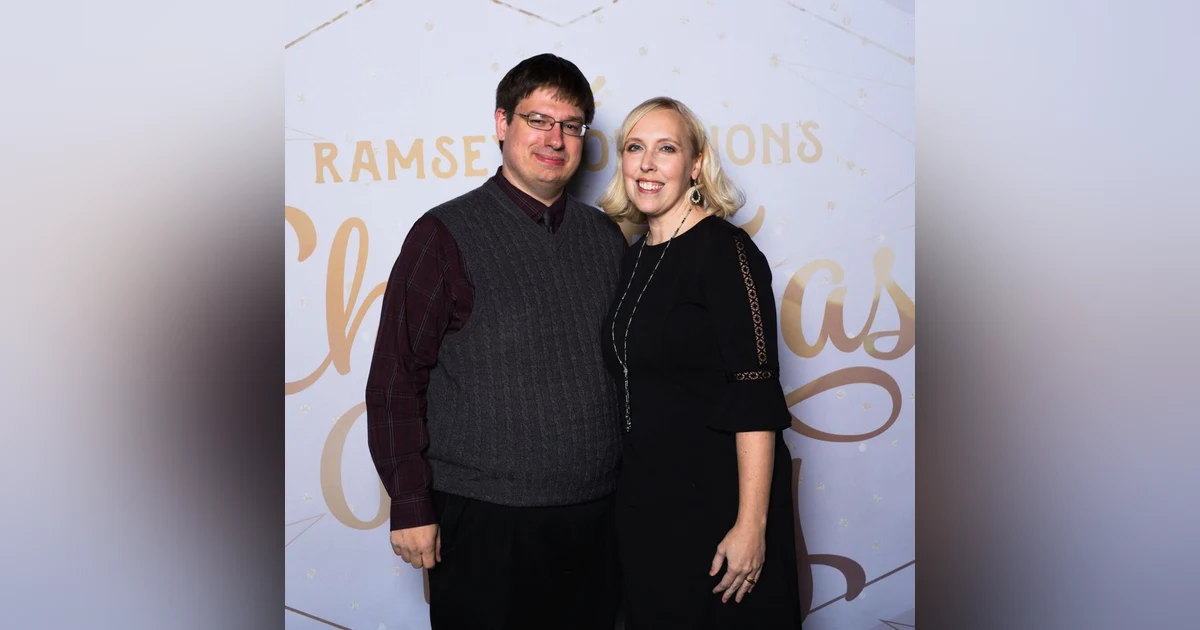



Amy and Nathan Fritz share part 2 of their experience with the Ramsey Solutions Organization. In this episode they talk about:
- Differences in accepting the culture between spouses who marry in to the company as opposed to those who were already married when their spouse was hired.
- The Daily Beast article/Twittergate.
- The time Amy thought she was going to get Nathan fired by leaving a comment on a blog post.
- Jon Acuff's resignation.
- The Ramsey Christmas Party.
- What happened when they lost the Best Place to Work contest.
Patreon Membership Community. Find us here: Twitter: Amy Fritz Untangled Faith
Instagram: Amy Fritz Untangled Faith
Website: Untangled Faith
Support the show (https://buymeacoffee.com/untangledfaith)
Amy Fritz: [00:00:00] Welcome to episode 163 of the Untangled Faith podcast. Today I'm talking with a guest who is passionate about helping people develop faith communities that probably don't look like the typical business and CEO model we have seen promoted for so long in these pastoral leadership spaces. I can't wait for you to hear her thoughts, and stay tuned to the end, where I will share about something that I recently wrote that I don't want you to miss.
I'm Amy Fritz, and you're listening to the Untangled Faith podcast Podcast for anyone who has found themself confused or disillusioned in their faith journey. If you want to hold onto your faith while untangling it from all that is not good or true, this is the place for you. Here's my conversation with Toni Daniels from the Luke 10 Ministry.
Toni Daniels, welcome to the Untangled Faith podcast. It is good to have you here.
Toni Daniels: Thank you so much. It's good to be here finally. Finally able to meet you. It's really a pleasure. Thank you.
Amy Fritz: Yes. I [00:01:00] had to reschedule our last one because I was working on finals and, uh, a paper I was writing for my paralegal certification.
Um, was writing- ... an appellate brief, and, um, I'm not... I've d- I know just enough to be dangerous. So ask me about state action if you want, and if it is- That's wonderful ... a First Amendment violation for a city manager to block somebody from their personal Facebook page. That's neither here nor there. Oh. But if you wanna ask me at some point, I did a little reading- Oh my goodness
on that. I know just enough- Wow ... to be dangerous. So thank you for- Well, that's incredible ... your
Toni Daniels: patience. I, I was actually glad 'cause I was doing a grant writing proposal- Oh, I bet ... at the time. So yes, I have now feel like I've got my master's degree in nonprofit management,
Amy Fritz: so So yeah, I, I totally get that, and I'm so glad it was okay.
I, I have come to this point where I'm like, "Oh, if it's not gonna work for me, I can reschedule. I'm allowed to do that." That is so
Toni Daniels: great. Yeah, it was-
Amy Fritz: And it's okay. It was good. Everyone will be fine. Everyone- Yeah ... and so far, so far it's worked out.
Toni Daniels: I'm so
Amy Fritz: glad. Uh, not long ago, [00:02:00] Zach LaValley like sent me a DM, and he says, "Hey, I have an idea of somebody for you to interview.
Are you interested?" And I was like, "Send me an email. Sure." I'm curious of what Zach has to say about who I should interview. First of all, I'm like, "Is he just gonna pitch his wife? 'Cause I've already emailed her." I mean, he doesn't have to convince me that I need to interview Kristen. This is weird, but that's fine.
Maybe he's working as her PR person now, and I didn't know. Saving a little bit of money. So he messaged me, and it was not about Kristen. He's like, "Hey, I work, you know, with this ministry, and I was curious if you'd be interesting, interested in having a conversation." And I immediately said, "Yeah, that sounds interesting."
So it was not painful at all. Here's what I know from my looking on the Internet. You have been a church planter in South America. You currently live in the Nashville area. We just found out we don't live too far away from each other. Well, you're closer to Nashville. I'm south of Nashville. [00:03:00] And you work for a ministry called Luke 10, and it's not a denomination.
Uh, the mission, uh, that I saw said that it was about connecting and equipping mature spiritual parents, spiritual parents is in quotes, to nurture vibrant, vibrant families of Jesus. That's all I know, and I would love for you to say, "What does that mean? Tell us more about this," and like, no, I mean, I have read-
more about it. Oh my goodness. Like, and I'm curious 'cause I- My listeners have had, like, some hard- Yeah ... church experiences. Oh. And they're curious about ways to, different approaches for community, and ways people are trying to fill that gap where, especially for people that are like, "I'm just not sure. I'm not sure that the traditional way this all worked i- is gonna work for me."
Yeah. And so it- whatever you wanna tell us about what you are all about and kinda set that up for us, I'd love that.
Toni Daniels: I mean, [00:04:00] just, just give me an open stage. Yes. I think I need to breathe and just center a little bit and see what's the most important thing to say, because there's so much that could be said, and I don't want
I wanna make sure that what your audience needs to hear is what's heard. So let me breathe for... I was like, I have no idea what we would talk about today, honestly. I know. I was
Amy Fritz: like, maybe we should've, like, talked to her and said, uh, are we talking about your book?
Toni Daniels: No, super- Are we talking about- I know, right?
I was like- ... something else ... but this is great. Yeah. So let me just center and breathe for a minute, and we'll see, uh, what, what, where I begin. Yeah. Thank you so much I think I might start with, um, when I was... Uh, I felt drawn into missions when I was 16 years old. Uh, I was one of those strange people that, that, uh, journaled from the time I was 13 on, just loved God.
Um, didn't understand why I was so drawn to God at the time. Um, now I kinda have a, a, an understanding of what was drawing me there. Um, um, [00:05:00] and, uh, as I studied and, and did my seminary work and everything, there was a question that was plaguing me. My, my church was about 7,000 people at the time. I was in Memphis, Tennessee.
It was an amazing place, as you can imagine. It gave me a lot of skills as a child that I didn't get in my home. Um, and so that was why I was so drawn to God, I think, is because there was some seeing and some naming and some drawing out of me as a human that I was not getting in my home, and the church gave me that.
And once I reached about 16, I felt like, um, I had out matured it. Like- Hmm ... I didn't, I didn't see adults growing in their maturity. And my husband and I, at the time, we were dating. And we both were these weird people that were just like, "Something's wrong with the institution. We love it. We love the people that we've created family-like bonds with in this 7,000-member church, and at the same time, there is something radically missing here."
[00:06:00] And so we began this journey to, to delve into community and what the Bible taught about community and what could really be missing. So that's a little bit of my background. Then we went on the mission field and planted churches for 20 years in Uruguay, South America, in an atheistic country, uh, very unchurched.
And we had to learn i- what church could be at the basic level. Like, if, if you had n- you had no institution- Yeah ... you had no sermon, you had no service, you had no worship team, you had nothing, and you're back in a first-century setting, literally, what's church? And we came to the understanding that church is a heart-to-heart connection with God and each other.
Later, we would discover brain science, neurotheology, Kurt Thompson, Dr. Jim Wilder, Dr. Lehman, all of the beautiful things that are emerging now in the last 20 years of our time, where Dr. Dallas Willard and Dr. Jim Wilder, who, who... Jim Wilder's one of [00:07:00] my mentors, who they have named salvation now as secure attachment, which is just mind-blowing, I think, for the church today.
And, and they, they give the biblical premise for that, and we do in our book as well, in several of our books. But, um, and then so we took Luke 10, um, took that and said, "Well, if, if salvation's secure attachment, then what's church if not secure attachment with each other and God together?" And, and if that's really what church is, then what does that look like for us?
Because it doesn't look like a service on a Sunday morning where we're just being talked to, because that doesn't bring sustainable transformation in our lives, nor does it help us have a relationship- Yeah ... because that requires skill. Yes. And you're not growing skill- Yeah ... by listening to a sermon or reading a book.
So that really is a lot of what Luke 10 is about. We want to see a vibrant family of Jesus within reach of every person on the planet, and vibrant family of Jesus to us defines church as secure attachment, um, where people have healthy relationships [00:08:00] with each other, God together. Uh, they can heart-to-heart connect with each other healthily and listen to God and follow Him.
And that's the, the, the church in a nutshell for us, and if we could practice being that in small ways everywhere, then that would literally be sustainable transformation. And it, and it would be viral multiplication as well, because every family could reproduce themselves in another family pretty easily at that point.
Amy Fritz: Yeah. That's interesting. As you're talking about that, it made me think about Pete Scazzero's Emotionally Healthy Spirituality- Yeah ... book. And, you know, if you've listened to his story- Yeah. Yeah ... about how he came to this point where, you know, he's leading this church and his wife was like, "Hey, by the way, I'm just, I'm not interested.
You can go."
Toni Daniels: Yeah. "I'm not..." Yeah. I, I did a conference with them- He's like, "Oh, boy. Well,
Amy Fritz: you're missing something," right?
Toni Daniels: Yeah. I did a conference with them probably 10 years ago now in, uh, Mexico, and had the privilege of sitting down at a table with them and talking about these things because Jim [00:09:00] Wilder and, and Dallas Willard have, have apro- uh, have approached all that from a neuroscience perspective, and really reach people who aren't churched, whereas Scazzero and his wife felt very called to people who were very Christian and churched, people who would never pick up a psychology book because they think that biblical counseling's the only way, for example.
And so, uh, and I talked with him and I said, you know, "Do you, do you know Jim Wilder and all the movement that's happening?" He said, "Yeah." He said, "I just feel called to the church, and, and to churched people," not just the church, right? Because there are lots of people in the church who aren't churched. But
Amy Fritz: Yeah
Toni Daniels: but the churched people, and putting it in language that Christians can understand. And, um, it was just so beautiful to be able to be with both- Yeah ... of them at that conference and just thank them for the work that they're doing, because it is really powerful. Um, but because I was in a atheistic country for 20 years- Mm-hmm
they didn't care what the Bible said. Yeah. Um, and so we could bring them to Christ through relationship and through, uh, what healthy bonds look like [00:10:00] and what joy, uh, what joy, that feeling you get when someone's glad to be with you, how powerful that is.
Amy Fritz: Yeah. I was thinking about how so much of the leadership culture of, like, the CEO business world has informed how people approach faith communities, and what has come of it has been really sort of sad and lacking, right?
So when I hear you talking about this secure attachment that people will feel and really what salvation, how salvation is an illustration of, the ultimate illustration of that, I think, wow, that could never have come from getting a bunch of elders together to read Jim Collins' Good to Great, which is what they were being taught by, like, Bill Hybels and all the leadership gurus were like, "If we can follow the, the models of these CEOs, we can build this thing."
Toni Daniels: Yeah,
Amy Fritz: yeah. [00:11:00] And some of these- them did build amazing things. What we ended up with then was a CEO leader and a feeling of building an empire-
Toni Daniels: Yeah ...
Amy Fritz: that was not at all reaching people's hearts and really sad. And what's kind of funny to me is that, you know, they took in all this business stuff, which I, I, I even say I probably have one of those books, Jim Collins books, behind me.
My husband was required to read for his old job, um, where they read Good to Great, but then they also had to read How the Mighty Fall. And I feel like all, a lot of them missed that, and it had to do with like the stages of decline, and when you think you're so great- Yeah ... and like you're grasping for salvation, and then like this like plummet to ir- irrelevancy.
I'm seeing that. I'm seeing that happen, and it does make me feel encouraged to hear of like ministries like Luke 10 that are saying, "W- we see this gap, and [00:12:00] we really feel like this is what's, this is what we're called to." And also that you're called to, to speak in a language that non-church people can hear.
Like, what made you see that? Like, what, what were you like, "Yeah, this is missing, and I, this is where we wanna be"?
Toni Daniels: I, I mean, honestly, it was devastating because I had been trained in the church my whole life. I had gone to seminary, and I was prepared to be a Bible teacher and church planter, and I went to Uruguay, and, um, a totally atheistic population, and they're like, "I don't really care what the Bible says.
Like, what, what, what else do you have to offer?" You know? You were completely
Amy Fritz: unprepared.
Toni Daniels: I was completely unprepared. And we were- I'm here to reach the
Amy Fritz: church
Toni Daniels: people. Yeah, yeah. And we were invited to come by the church in Uruguay, the few that were there, because they knew they wouldn't be able to reach their own people.
Um, and so there we were in a very strange situation, and it, at the time, this was [00:13:00] many, this was 30-plus years ago now. At the time, it had the highest suicide rate in all the Americas, in all of the countries south of the Equator. And I was in sociology. My husband had majored in anthropology, and so we were trying to figure out why they were killing themselves and if the gospel actually could make a difference in that.
Um, and so yeah, we started doing some deep diving pretty quickly into, uh, relational connection and emotional health, and that's for our own self, for our own, um, you know, being ripped apart from your family, having no, no family, no community, no church down there. We were new parents. We were in our early 30s.
Um, we had to figure out, how do we not burn out and blow up? It was known as the graveyard of missionaries, and so, um, by the time we, we came home, we had been the longest missionaries on the field, and, and we were the only ones that made it, you know, that long. And we jokingly say the only reason we made it is because we were willing to say that we could not do it and we needed help.
Amy Fritz: Yeah, yeah.
Toni Daniels: And [00:14:00] we got
Amy Fritz: help. We're gonna do it
Toni Daniels: different. Yeah. We got lots of help, and thankfully, Dr. Wilder and lots of other people were there to give us, um, emotional help, um, that we needed to be able to grow emotionally ourselves. And as we started to do that, we just passed on every single thing we had learned, uh, to everyone around us.
Um Yeah. And, and then s- started weaving in scripture, you know, because it's, it's in the Bible. I mean, hesed, you know, hesed, uh, is used to describe God 253 times in the Old Testament, 253 times. And that word hesed is attachment love. It's what psychologists talk about attachment. And he loves us with that kind of love, and it's a, a sticky bonding that changes your life because it's so sticky.
You're so bonded to that person, your life changes naturally because you're, you're bonded through space and time. Um, so, so it's there in the Bible and, and we can take it from a biblical perspective, but we had to do it from the psychological perspective and then help people see that that's who God is.
[00:15:00] Yeah. It was very strange Yeah ... for, for most Christians to think that way. But, uh, that's, that's what we were sent to do, so we had to adapt. So it is hard to be back in Nashville, I have to say, for me- Yeah. Yeah ... in the middle of this massively churched, overly churched population, and, and actually have a hard time finding people who really wanna be church at that level, at, at a level that changes their life and that brings about true transformation.
I find that most of them are real happy going to a service and just doing the, the rhythms that, that, that institutional church has, and few churches want to grow and change until their pastors commit adultery or have an affair or blow up or blow apart, and then they're, they're willing to change. But at the same time, I think we're all kinda like that.
I think none of us really like to change. Uh, I heard someone say once, "You never jump out of a perfectly good boat- Yes ... unless it's on fire."
Amy Fritz: That's true. [00:16:00]
Toni Daniels: And I'm like, "Yeah, pretty much." So this evolution of culture and of, um, complexity of organizational development even has shaped the church too. The, the church tries to think that we're immune to societal shifts, but we're not.
Amy Fritz: Yeah.
Toni Daniels: Um, in fact, the reason that we are in the predicament we're in is because of the French Enlightenment which shaped Christianity unfortunately to think that we could be transformed with information, that right thinking and right behavior could transform us, and we're still suffering the consequences of that.
So, and that was French Enlightenment thinking. That wasn't scripture. But yet the church today doesn't even realize that, right? Or, or it's beginning to realize that. Hundreds of thousands, millions are beginning to realize that. Uh, it, but it's gonna be a slow shift for, uh, especially more conservative people who think that the way they've been doing it is biblical when it's not.
Amy Fritz: Yeah. Yeah. The, I think of the early church, right? [00:17:00] They didn't have seminaries. They didn't have to write long essays on the theological positions on election or, you know, that sort of thing. And-
Toni Daniels: And you think many of them couldn't even read So they couldn't s- study the Bible like we stu- or, or read it every day like we do.
They had a relationship with a living God because that's the way they had to do it. Most of them couldn't read. So it is fascinating to think that we've become so, like we idolize the Bible as the only word of God. And you're like, for, for hundreds of years, people didn't have access to that in their home.
They couldn't read the word every day. So they could tell stories. It was an oral culture, so they did pass it down orally, but at the same time, they had a connection to something called the Holy Spirit.
Amy Fritz: Yeah.
Toni Daniels: Yeah. Which is live and active and, and so that's why we teach people to listen to God together, w- God and each [00:18:00] other together, and discern how to do that well.
Amy Fritz: Yeah. Yeah. Um, uh, when I was reading your description there about, um, spiritual moms and dads, I mean, this feels vulnerable and awkward to say. It made me feel a little anxious. Uh, I, I've thought about the sort of people that have positioned themself as leaders and dis- that want to disciple others in our churches.
And when I approach conversations like this on my podcast, I think about my listeners too, and I think so many of them have been in situations that were like, somebody's like, "I will be your spiritual father or your spiritual mother," and what that looked like was, "I will tell you what you're doing wrong.
I will-"
Toni Daniels: Abusive. "...
Amy Fritz: I will re- I will be like, 'I, I saw your Instagram, Amy. I saw your Facebook post, and you really need to settle down a little bit.'" Mm. And like, it, for me, it looked like women's ministry leader coming up to me and saying You know, maybe you need to stop [00:19:00] talking about mental health online so much, and maybe the problem is a sin problem, you know?
And it's, you know, when you say your daughter's struggling, you know, have you considered if she's baptized yet or not? You know, like, uh, that is the so I have a little PTSD when I think of putting myself under somebody who considers- Yeah ... themself- Oh, yeah ... a spiritual father or mother. Tell me how you envision that and how it's different, 'cause I'm hoping it is.
I'm thinking it is. From what I hear from you, it isn't like somebody that's in my life to tell me to like get me on the straight
Toni Daniels: and narrow. So different. So different. That you're,
Amy Fritz: yeah,
Toni Daniels: like it is.
Amy Fritz: Um,
Toni Daniels: and, and I love, I love that you brought it up because honestly I probably kicked against this as well, 'cause I didn't found Luke 10.
Uh, John White and Kent Smith were the founders, and I came in real early in the game to bring in the brain science, uh, piece to it a- and form all, all the training. Um, but I did kick against that. Um, I kicked against it for a different reason I think. Um, if, if we think [00:20:00] that church really is, um, this sticky love, uh, in, in the New Test- so in the Old Testament it's hesed, right?
This Gr- this Hebrew word hesed that means this sticky love used of God. In the New Testament we see koinonia, which is Greek. Um, and it is, I mean, 1 John 1:3-4 is, is, just explains what it is right there. It, he says, "We proclaim what we've seen and heard so that you may have koinonia, that you may have fellowship," and he says it, "with Christ, with the Father, and with us."
Um, and so a- and it makes his joy complete. Like there's something complete about this. So in Luke 10 we talk about the whole Bible can be summed up in three phrases, and Dr. Kent Smith, uh, he's famous for this. He says in the beginning there was joy. A, a, a trifold family, Father, Son, and Spirit dancing in delight.
There was this, this su- and so much joy it exploded into creation, right? And in the end when we go to Revelation, we see even greater joy because now you have this family, [00:21:00] Father, Son, and Spirit, but there's like this multitude of nations as well. And in between now, we have a great invitation to come and share in the delight of this family, and that is what the Kingdom of God's about is, is coming and delighting in this, this dance of, of vibrant glad to be together no matter what energy that's emanating from Father, Son, and Spirit, the original family.
So- If we think church then is, is this secure attachment with each other and God together, like a family bond m- in the best sense of the word. So most of us haven't had parents that, that were good models for us of, of what God might be like, and, and that is devastating. Um, and there's, yet there's an invitation to know God as Father and, and Mother, the Spirit, in a way that heals us and transforms us in a way that's joy-filled and Jesus-led, what we [00:22:00] would say, which is glad to be together no matter what.
So I'm not, I'm not policing, uh, behavior. Um, uh, a- and my teens, I have four children, and the last two are, are now teenagers, right? So those of us who have raised teenagers, uh, well know that, uh, you know, they gotta make their own mistakes. They have to do, they have, they, it's their story to live. It's not mine to tell them what to do.
I get to enjoy them through it, and I get to be a source of, of strength for them even when they're making mistakes, and en- encourage them to make those mistakes 'cause they're gonna learn from them. Yeah. That's what real good parents do, right? We just haven't experienced that. And Luke 10 is about training people to be really good spiritual moms and dads to their, to their self first, letting Jesus parent them, and then to their own children if they're, uh, if they're parents.
Mm-hmm. And then if they're eldering a community, then how do we then be joy-filled and Jesus-led in our eldering and, and, and [00:23:00] sacrificially caring for an entire community? So again, our leadership's even servant based. Mm-hmm, yeah. It's sacrificially caring for community. It's not lording over or leading that.
So we, we take some of these terms and we redefine them the way we feel like God defined them or the Bible defines them and it looks very different than a leadership structure of any kind that any church has had. We have a participatory leadership structure where there is no one person calling any shots.
There's no one teacher. Luke 10 is almost like a common source, uh, group where everyone is a teacher and everyone is a learner. So we, it is a whole new paradigm of what kingdom can look like, I think, at least nothing like it I've seen on Earth.
Amy Fritz: Yeah. I like that. So if somebody were to say, "This is interesting.
Tell ... I w- uh, if I wanted to unlearn some of the things that maybe [00:24:00] I thought were, like, the gold standard of faith community building, and I wanted to start something different," I know you offer resources, but what are some of those first steps to take in building a community that looks More like what you're describing?
Toni Daniels: Yeah, yeah.
Amy Fritz: Or to me to, for me, what should I, as a, as a person, like how do I embody that, right? Like w- what, what, how do I feel? How do I show up?
Toni Daniels: Yeah. We have ... I would invite people to an introductory call with Luke 10. We have a 90-minute call where we, uh, give you some materials to look over to see if this is really something you would be interested in, and then we just give you a space to think about that, listen to Jesus, um, and decide whether doing a six-week course, you know, would be something that God is inviting you into.
Over the six-week course, we teach you, um, how to be a church with [00:25:00] just one other person.
Amy Fritz: Mm.
Toni Daniels: Which is actually so much harder than going to a Sunday sermon, I have to tell
Amy Fritz: you. Yeah.
Toni Daniels: And it in- intimidates most people because the thought of connecting heart to heart with one other human is terrifying for most people.
Um, a- a- so we t- we, we teach how to do it safely, um, so that you're not, uh, blown out of the water or so that you're not, uh, lectured to or parented incorrectly even by your friend, right? Yeah, yeah. Like, a lot of times we show up with our emotions in a Christian setting, and the first thing we get is invalidation.
We get told to just trust Jesus. We get quoted a scripture, and it is not safe. And the most important thing for healthy relationship is safety. Um, so we teach Christians how to actually be safe with each other in their emotional vulnerability, and that's our six-week course, and then how to listen to Jesus together.
And then we train you to practice that every day because we ... These relational ways of being are actually [00:26:00] skills you can develop just like, uh, just like playing tennis. And, and so if you don't practice them, you never develop them. So that's why we have so many untransformed Christians in the Church today, not because they don't wanna grow, but they've never been given the skills to practice in order to have healthier relationships.
So Luke 10 bases church on skill practice and healthy relationship because we've all lost that art. So we train you in a church of two, six weeks. And then if you want to join a community of practice where you can continue getting practice with other el- other spiritual moms and dads who are training together, uh, a lot of people opt into that because they don't have that locally.
They don't have anyone wanting to train locally. So that was the, that, those would be the practical steps, but many people might wanna ... They're like, "I need to be convinced of this. This- Yes ... I don't know about this. I don't know about this." Yes. So we have a whole book series. This is a big, sounds like
Amy Fritz: a big commitment.
Toni Daniels: Right. We have a whole book series out there. It starts with Relational Revolution is the, is our first, uh, lead book on this, [00:27:00] um, because we're not the only ones doing this, and we know that. The Scazzeros are doing this. Um, Jamie Winship is doing this. Uh, I could name 50 million other pe- no, not really.
Probably 50 other people and organizations- Yeah ... that are doing this right now. So we wrote a book because Luke 10, one of the things we've done is we've been paying attention to this for over 20 years globally. And God is raising up people in this relational way all over the world. This is not unique to the US or to us.
And so we listened for years around what are the values God's calling the church back to, and we wrote the book Relational Revolution based on the five core values that we see God calling his bride back to, and then we give resources in the back of different, different organizations that are thought leaders in this way.
Uh, so that's the first book, and then we're breaking down each value in a book itself. So we just published Jesus Led. Yeah, I saw that. Mm-hmm. And, and the feedback I'm getting is that it's our best yet. So if you wanna just jump right into Jesus Led, go [00:28:00] for it. It is where you're gonna find everything that we're kind of talking about today with the brain science of, of attachment and the biblical basis for attachment, how our dis- our distorted attachment actually leads us.
And we think we're being led by Jesus, when in reality we're being led by our automatic negative patterns created by our distorted attachments. Interesting. And it's fascinating how many pastors think they're hearing God's voice when really they're just hearing their own insecure attachment. Uh, so how do we actually let Jesus lead us instead of these other, uh, currents in our lives that we don't know about?
How do we identify them and then, and then, and then rewire them in a healthy way so that we can let Jesus lead us?
Amy Fritz: Now
Toni Daniels: for a quick break. Now back to the show.
Amy Fritz: I, uh, this is sort of blowing my mind. I mean, I'm sure that this in the best way. I've had several conversations lately, you know, even on my podcast about the whole idea of, [00:29:00] uh, connection.
And I've been thinking e- even the idea of secure attachment has been coming to me over and over again as I take in what I see in, uh, Christendom, like the empire of, of the systems, and how it is so littered with insecure attachment. So much of what we see comes out of w- it feels like people feel this sort of like, eh, manic energy of like, I have to do the thing to, to have the power or to be right.
Like this, this like, I don't know, maybe it's like a '80s and '90s evangelical thing, where it's like we had to have the right answers. That was like the most important thing, is to, is that for some reason we thought we were gonna get to heaven and we were gonna be asked like, to do a quiz or something, and if we got it wrong, we were not gonna be let in.
H- how does [00:30:00] anybody feel any sort of joyful- ... welcome into the community when you're like, "I gotta learn the answers. I'm here to- Yeah ... make sure I don't get it wrong."
Toni Daniels: I mean, I have to tell these stories. So my children have only been, ever been raised in house church and in this movement, right? So my youngest two especially.
So one day, I love my parents, I love my parents, and my father was trained in evangelism explosion in the- Oh ... in the '80s, right? I mean- Mine too. Yeah. Oh, yeah. "If you were to die tonight
Amy Fritz: and stand before Jesus..."
Toni Daniels: Yes.
Amy Fritz: Yes. A-
Toni Daniels: and, and he has a gift of evangelism. It's beautiful. I don't, I'm not saying anything bad about it.
But, so my, my children are in... We're, we're staying with my parents a, a few summers back. So my kids at the time had to have been like, I don't know, 12, uh, 13, 14 maybe. And, uh, my youngest, and my dad just decides to bust the EE questions on my kids.
Amy Fritz: Yes.
Toni Daniels: I'm sitting there going, "I wonder how this is gonna go down.
This is fascinating." I'm silent. I'm [00:31:00] just letting them have their relationship. And he says, "So if you died today, you know, and you f- you, you stood in front of he- you know, the gates of heaven, and Jesus said, 'Why should I let you in?' What would you say?" And they both looked at each other and looked at me with this quizzical look on their face like- "Why would you ask?"
"This is the weirdest question." Yeah. And they sat there, and I just let them sit, right? And then, and then one of them, I don't remember which one, one of them says, "That's kind of the strangest question I've ever heard, Papaw, because in my mind, the Jesus I know would never be standing at the gate asking me why He should let me in.
He would be running towards me to grab me into His arms. He's gonna be so happy to see me." And my dad was like, he didn't know what to do with that answer because that answer had never happened before in all of his EE years.
Amy Fritz: Yes.
Toni Daniels: And he was like, he didn't know what to do. And he goes, "Yeah, but, but why? Why?"
You know, he, like, was looking for this right answer. Why would he, you know, why would Jesus do that? And he goes, "Because [00:32:00] I'm part of His family, and God loves me deeply." And my dad's like, "Yeah, but, but yeah, why?" You know? And he's like, "Because I was created in His image." Yeah.
Amy Fritz: I mean,
Toni Daniels: they're like trying to find the right answer.
Bless it, Daddy. Grandpa. And then they're like, "Because we know Him?" I mean, like,
Amy Fritz: Yeah. Yeah.
Toni Daniels: So, you know, I finally had to say-
Amy Fritz: He was ready to do the math and show them the math about how if you only sinned, like, two times a day 'cause you were especially good, what that would be for a year- Thank you ... and 10 years and 60 years.
Like, the math was figured out and ...
Toni Daniels: I was like, "Daddy, I think that they don't know the right answer yet, because they're living the relationship and they're, they haven't quite necessarily learned how to communicate that to other people yet."
Amy Fritz: Yeah. That's wild. Y- he wouldn't probably be standing there waiting.
Yeah, yeah. Just take for granted that of course he's gonna be-
Toni Daniels: Right ...
Amy Fritz: wait- waiting for us to say the right answer. But-
Toni Daniels: Yeah, a- and, uh-
Amy Fritz: It's so-
Toni Daniels: I don't know ... steeped into Have you, Amy, have you heard [00:33:00] much about spiral dynamics? So it, it is a, it is a sociological kind of concept that is not in daily talk yet, I don't think.
But it, it will be probably at some point. Reinventing Organizations is another organization that's come up with some really good teaching on it. But basically it says that the way humans mature, right? Societies do that too. And societies have different complexity, and when they're in a different stage of s- of complexity, they have a different mindset, a completely different mindset.
And so you look through scripture and then you look through our history as well, and these different mindsets come online in different moments throughout history, and with them shifts. And there's always a shift against what was and a shift towards a better way, typically. Um, so, you know, you've, you had caveman times where might was right and, and, and that's the way it had to be because the might protected the weaker ones hopefully- Mm-hmm
from being eaten by the animals. So, [00:34:00] you know, but then we found ways to protect ourselves as a society, and we didn't need that because we were protected by homes or by fences or by things like that. And, you know, so you can see how the complexity evolves and changes and the needs change to where today we're in a situation where we're, men and w- women really there's, there's no difference in our work because we have machines to do all of our farming.
We have like- Yeah ... h- lifting heavy things isn't even a thing. People have machines to do that. So, so really our work can be, um, very equal. Um, and our society can be very, um, led by participat- participation, um, instead of direct, uh, authority. But it also means that what has changed is even how we approach God.
And so I say all that to say There are people on this planet that are still in very survival places in their, um, in their societal [00:35:00] structure, and they might need that question. They really might. If I've, if I'm on drugs right now or coming off of drugs and my life is chaotic, and it's my... Right? I'm in a gang, et cetera, et cetera, I might need some heavy structure into my life, and I might actually respond to a gospel message shared with me that way.
But if we're in a different complexity of development-
Amy Fritz: Yeah ...
Toni Daniels: and, and we're emotionally mature, and we're not addicts, and we are growing and working together and learning how to collaborate, that's a whole different space, right? Yeah. And so the gospel coming into that space is gonna look very differently.
And I think at any given time, we need all of them on the planet, but it would be nice if the elders were mature enough to know which spaces needed those different techniques versus giving them to all spaces, right? Which just means they're not quite in a parenting stage yet, right? Yeah. I don't parent my three-year-old like I parent my 16-year-old.
Amy Fritz: Yeah.
Toni Daniels: And, and in the world, we have a lot of three-year-olds running [00:36:00] around in adult bodies, and they have to be parented that way. But then we have a lot of 16 and 20 and 30 and 40-year-olds and people trying to parent them like they're three, and that's not right either,
Amy Fritz: right? Yeah, yeah.
Toni Daniels: So a real spiritual mom and dad knows how to read the room.
They know all the stages of maturity. They know when you're allow- you know, you should be making all these mistakes right now and learning from them versus, you know what? You're kind of old. Y- you're old enough to know what you need to be doing right now, and you don't need me at all policing you. I'm your collaborator now.
Yeah. I'm your friend now, right? So that's part of what we do in Luke 10 too, is help people understand these things. And so I don't wanna ever, uh, be perceived as talking bad about the ways that things have been done, um, because there might be a time and a place. There might be. Yeah. But that time and place is not for everyone at all times.
And, and a, a real spiritual mom and dad, or emotional, mature mom and dad [00:37:00] know, know when to shift into those more collaborative spaces with each other, uh, and trust each other to make their own decisions well, um, instead of feeling like we have to police and, and- Yeah ... make sure you got the right answer, you know?
A- a- and think that I actually know what that is.
Amy Fritz: Exactly.
Toni Daniels: I think true spiritual moms and dads are so humble. Most of the time we're kinda like, "You know what? You might be right."
Amy Fritz: Yeah. And this, like, detached, like, I, I, I'm okay with that I'm perfectly okay with the idea that I don't know the answer. Yeah.
And doesn't that feel good that I'm not responsible for it?
Toni Daniels: Exactly.
Amy Fritz: Right?
Toni Daniels: Exactly.
Amy Fritz: I can just be the one that provides the house for you that, that says anytime you want to be home, I want it to be... I want you to feel welcomed, completely at home, loved. Uh, when my kids are coming home from college first, you know, my kids have at most...
I'm sending my kids out of the nest. It's really hard. My [00:38:00] oldest is going to his senior year of college next year. Oh. My middle child just started college this year, and so when... And my youngest is gonna start her senior year of high school this year, this coming year. It's all happening very fast. But when they were coming home over Labor Day weekend, it would be the first time last year that the two college kids are gonna be home after being gone.
And all I really wanna do is for them just to feel... How do I want them to feel when they get home? I want them to feel, like, delighted in. I want them to smell the muffins baked for them. I want them... Like, 'cause there's a whole other thing if they're gonna be here for months and, yeah, they gotta do their, they gotta help with the dishes.
They gotta do the laundry. They can't, like, leave. But, like, what I really want, you've got, "You're here for a weekend. I want you to, like, sleep in your bed and sleep in, and, and just remember that I, you are delighted in." Mm-hmm. And that's something I learned from my, my dad as a grandparent to my kids when they were [00:39:00] little.
The most meaningful, wonderful thing he did for them was something I didn't even realize until, how important that was, u- until I started thinking through it even the last couple years, is that when we showed up, my dad would say, "Where's Grandpa's boy? Where's Grandpa's girl?" And they would be like, "Grandpa."
And you know, like, they would be off to the races and, and having so much fun.
Toni Daniels: Right.
Amy Fritz: And why did they love coming there? It was 'cause they knew that when they showed up, they would be delighted in for no other reason- Yes ... but that they were Grandpa's girl- Yeah ... and Grandpa's boy.
Toni Daniels: Yeah.
Amy Fritz: Yeah. That is... What if, what if our churches were like that?
Yeah.
Toni Daniels: And you know, one of my, one of my mentors once said to me, "Toni, don't ever underestimate the power of just enjoying people." Don't ever underestimate that 'cause we feel like we have to tell them the gospel or tell them about Jesus and tell them so many things. But again, if knowledge, if knowledge alone, like intellectual [00:40:00] knowledge alone is not effective at transformation, it's actually an experiential knowledge, then actually being glad to be with them no matter what is being God to them.
And they're having an experience of this hesed, this, uh, 253 times that God, God was called that, right? This love, and I love, I love Bowlby's, um, definition of attachment. It's deep and enduring emotional bond that connects all the way across time and space that changes someone from the inside out. Why would we not wanna do that instead of- Yeah
try to preach to them, tell them they're doing something wrong?
Amy Fritz: Yeah.
Toni Daniels: When we can actually get inside their head, literally, with the joy and the delight of God. And the Bible, and the New Testament says that it's his kindness that leads us to repentance anyway. So if there is any hope that any of us will repent from any of our negative automatic patterns,
Amy Fritz: Yeah
Toni Daniels: it's only because someone deeply enjoyed us that we have the strength to do that. So yes, [00:41:00] amen. I get chills just thinking of you doing that for your kids. It's like
Amy Fritz: the, the, um, the burden, the weight that takes off somebody to feel like they're responsible for someone's salvation, for somebody's, like, spiritual formation.
I mean, that is too much-
Toni Daniels: Oh, yeah. Yeah ...
Amy Fritz: to carry. I, I can't even do my own. To have to be responsible, and I, I do think that some of the ways that we go most wrong in our traditionally set up faith communities is that leaders feel like their one and only job-
Toni Daniels: Yeah, it's
Amy Fritz: those police that come out ... is to make sure they save your soul and do it right.
If, that you're doing it, you know. And like- Yeah ... I noticed the thing you did, and it seems like you're doing it wrong. And they're like, I don't know how often that actually results in anything good to begin with. Like, how- No.
Toni Daniels: It's like the first things that we tell people to do is listen to Jesus on how he feels about being with you.
Because most people have never even listened to God on that. They wanna know what I'm supposed to do. What right behavior am I not doing? Convict me of my sin, [00:42:00] Lord Jesus, right? And then show me what I'm supposed to do. 'Cause it's all about sin for some reason, and it's all about doing what's right. And, you know, the Bible says meditate on what's good, what's lovely, what's whole, what's pure.
That's what it says to meditate on. It doesn't say meditate on your sin. It says to meditate on all the good things. Yeah. But we've never actually come to God and said, "What good do you see in me that you love? Why did you die for me? Like, 'cause you died, obviously you, you, when I was in sin, you loved me enough to die for me.
So, you know, there's something good in me, innate already, that you love so much. What is that? And show that to me." And so we train our, that's the first thing we train our people in doing, is, is being delighted in. How do they feel that delight from God, and have they ever felt it? Because most Christians have never actually felt delighted in by God.
Wow. It's devastating. Yeah. Devastating. So yeah, that's the first step of a good spiritual mom and dad, is they, they start to feel the delight of God in their own, uh, life. Yeah, 'cause we can't give what we don't have, right?
Amy Fritz: [00:43:00] Yeah. It's having young adults for me that's really helped me realize What is sustainable and healthy anyways?
Like, I can't control them. What, what, how was I thinking that would be the way? Right?
Toni Daniels: I know, right? Uh, so I have, uh, my oldest two are, are 10 and 20 years older than my youngest. Mm-hmm. So, I have been doing this for quite a long time, and seeing the different stages of it and all. And, and in every one of them, they're each different.
You know, they each have their own, own way of thinking and their own way of experimenting with the world. But what I have found so much comfort in is that Jesus himself, one of the 12, made choices that harmed everyone else, and even harmed himself ultimately, and that wasn't Jesus's fault. Like, we blame parents for everything, and I'm like, really?
Well, why don't we blame Jesus for Judas? Because, you know, I mean, Jesus, right? Like if- Yeah ... if anybody [00:44:00] should have been responsible, quote-unquote, right, for making sure all his children behaved, it would be Jesus.
Amy Fritz: Yeah.
Toni Daniels: And he didn't try- And they did not behave ... and he didn't. He knew what Judas was gonna do, and he didn't stop him And he could have.
He could have controlled his behavior. He could have controlled his thinking. He could have done all those things, and he did not do that. And so when I listen to Jesus about my own children, who make crazy decisions... I, I have a book, um, called Back to Joy that is a book, and then a parenting book called Fearless P- uh, something about fearless parenting.
I think that's what it is. But, but it's all about letting God parent us so that we can parent our children well in this, in these stages when we can't control the outcomes. Um, but I, I just hear Jesus saying to me, 'cause I, I often think I'm doing it wrong and feel like, "God, I'm just a failure. You know, I'm just a failure."
And, and I, I see him and feel him say to me, "This is their story, Toni. You got to live yours. You [00:45:00] got to live your story. You got to make your decisions. You got to have your relationship with me and your husband, and you love your life, and you're happy with it. Let them make theirs. They get to make theirs, and I don't hold you responsible for all the decisions they make, my love.
You have never modeled for them anything but how to love me, connect with me, be with me, stay faithful in your marriage, et cetera, et cetera, and repent- Yeah. Yeah ... and say you're sorry when you're wrong."
Amy Fritz: Yeah.
Toni Daniels: Like, you've modeled for them every way a healthy relationship can be, and growing constantly to keep, to keep your skills growing in that.
Whatever decisions they make's on them, baby. And you know what? You're so inside their brain that I promise you they will, they will come to wife and love eventually. It might take their whole lifetime, but you know what? Don't worry about that. I g- I got that. Like, I'm on that. Yeah. And it does bring me deep peace when I am concerned.
It's like you gotta have the bigger perspective, and I think only those of us who are raising teenagers, um, or who have seen [00:46:00] generations come and go, right, have that longevity perspective that, um, it's not about what my child doing right this second at 16. It really isn't. Uh, God's got such a bigger perspective with them and for them, and, um, I just have to do my part, no more, no less.
And when I try to do more or less, mm, it usually goes bad both ways.
Amy Fritz: Yeah. Yeah. Absolutely. I am so grateful to hear you flesh out these ideas, 'cause as I was reading, I was like, "Is this just a small group thing?" And I, I gotta tell you, I got some bad small group experiences. I just, I just posted on Substack a question like, does it...
Could people tell me, do- have you had good or bad experiences with small groups? I'm really curious to hear what people say. Oh, my God. Because I have never- ... been in one that ended well. And in fact- No ... as I was thinking through it, I felt teary. I felt like, "Oh, yeah, that one got broken up, and we were told we weren't gonna be in it anymore.
We were no longer gonna be part of the [00:47:00] chosen people to be in the group."
Toni Daniels: And then- I am so glad you brought that up, too, because Amy, that's the problem, is it ended. Uh, uh, the small groups, the way we were... And again, my master's degree was in church planting in the small group era, right? Yeah. So I learned all about cell churches and small groups, and I was like- Yeah
that was the problem, is all of our small groups that I know of in the institutional church are all formed around a Bible study, some type of book study, some type of study. Again, so we're, we're, we're there- Oh ... to intellectually- Yeah ... gain knowledge. We're not there to bond with each other for life.
Amy Fritz: Yeah.
Toni Daniels: We're there to get some knowledge so that I can then go try to live it out, but we're not even there to practice the knowledge. We're not even there to practice it. Yeah. And then when the study's over, the relationships are over, and we are training... It's almost like serial dating, right? Hookups. It's almost like that to our brain because we get in this Bible study, and maybe we start to bond with each other, but then it's over, and we have to go leave.
And we've literally told our f- our head and our brain [00:48:00] that Christianity is not about lifelong relationships that span time and space. It's about doing these things that we do together, like study or serve or, you know, all the things, worship. But, but when you start to see church as secure attachment, then it's not a small group.
It's a, it's a, a lifelong bond with the people that I am going to be in relationship with and listen to God with for as long as God has us together, and I'll traverse time and space for them.
Amy Fritz: But what if the group gets too big? Do we have to break them apart?
Toni Daniels: Well, that's what's so fascinating is the way that we form it, it never gets too big, 'cause it starts, it, it
We, we train people to train in twos. So, um, you know, in Nashville for example, people are like, "Well, where do y'all meet, 'cause I wanna meet with you?" And I'm like, "W- we don't, we don't meet. Like, we meet, you meet in your home. I can teach you to be church in your home. Do you have a roommate? Do you have a parent?
Do you have a, a husband or wife? Do you have a [00:49:00] child? Because I can train you to meet in your home," and that's the way we train people. We train you, we train in multiplication already.
Amy Fritz: Yeah.
Toni Daniels: Yeah. Because, because I believe that if you're a vibrant family of Jesus, God's gonna grow your family, and you're gonna be able to pass this on to your children, your grandchildren, your neighbors.
You're gonna be able to re-parent as God calls you to re-parent, even adults who are immature, you know, 10-year-olds or, or three-year-olds inside of themself. And you're gonna be able to do that because you're vibrant as a family. W- we can gather to celebrate together, but we can't train in relationship with 100 people unless we break down into small groups, which we do that as well.
So when we do gather in big groups, we break us- we break ourselves down into smaller groups. But, but we ... If, if we're not doing church of two, at least, then we're missing a huge space of practice. Because if you're only practicing once a week skills of relationship to be church together, and I'm practicing them every day, I've outspanned you six years in [00:50:00] one year.
C- can you imagine? In two or three years, I've eclipsed you a lifetime in my relational skill training. Don't we want elders in our church who are that skilled at loving- Yeah ... like Jesus loves? Why are we so complacent with people who barely know how to love like infants?
Amy Fritz: Mm. Yeah. Yeah, I think- It's strange.
people are hungry for this. Is there a community I can show up to as my whole self? I'm not certain. Anybody wants that. And that's sad.
Toni Daniels: Exactly. It is very sad. It is. And so those of us who have it, we train together, and then we just love people where they are.
Amy Fritz: Yeah.
Toni Daniels: We just love them where they are, and they'll move one step closer, right?
One step closer. But that's all we can do is love people where they are. Mm-hmm. But that's why we train together. That's why we ha- Together ...
Amy Fritz: that's
Toni Daniels: why we find each other because- Well- ... how am I gonna train if I don't have people training at
Amy Fritz: my [00:51:00] level, right? I'm gonna side-eye you on that. I gotta be with people, you mean?
The people that might hurt my feelings. Is there another option-
Toni Daniels: I know, right? It's like Jesus is- ... that
Amy Fritz: is just me and Jesus ...
Toni Daniels: Jesus' bar was to love your enemies. You know what I mean? I mean, it was like- Oh, that's enough of that ... not a low bar. It's like, wait a minute.
Amy Fritz: I'm gonna edit that out. No, I'm just kidding.
Censor you. No, I hear you. Yeah. What encouragement do you have as we wrap up for those people that are like, "I would love that." Um- "I'm just not sure." I'd like
Toni Daniels: a nuts- Um, you know, I, I've been, I've been really easy on the institutional church today because I get, I get a lot of slack for supposedly talking bad about the institution, and I recognize that you have a lot of deconstructioners listening, um, to this podcast.
And so... A- and Dr. Wilder himself said about Luke 10, wrote on one of our books actually, that, um, that we lift up those who are deconstructing, that we [00:52:00] serve them radically, that we love them, um, that they are an underserved and, um, invalidated population right now. Highly invalidated. I mean, people would be like, "They're backsliding, and they're this," and I'm like, "Really?"
Like, "Do you really believe that?" 65 million people walked away from church as an institution, and this was over 12 years ago. Uh, Dr. uh- Just Packard, is that his name? He was actually, one of them was from Nashville. They wrote a book, um, and I should know the name of it because he wrote the forward for one of my books.
Amy Fritz: Yes.
Toni Daniels: Anyway, he wrote, he, he termed them the dones. And, and it was 12, 15 years ago, this huge po- 65 million in the US alone walked away from church. And if, if that doesn't tell the institution that they need to rethink some things, um, I don't know what will. And it, and it really is sad that, that the institution would then turn and blame all of those people.
And they were leaders, the, many of them, over [00:53:00] half of them. They weren't backsliders. Um, but they haven't given up on their relationship with Jesus. They just knew that they had out-matured the church structure, the institution. So while we are very friendly to the institution and we have churches who have come to us for training, and it's amazing and it, it's miraculous and it is not common, the core people that we really serve are those out there going, "How do I be church in a way that's healthier without having to go to that building because that is the last place that I feel life?"
Yeah. And, and we wanna bring life back into the body of Christ in ways that are organic and, and easy to pass on, uh, to our children and to those around us. So I just wanna say that, you know, if you, if you have been, uh, abused, um, and, and deeply injured, um, you know, we see you. Um, we also have been injured and abused, many of us, and we are trying to lead the way in how to heal from that [00:54:00] well and not let it lead us, right?
But Jesus lead us. So even in that scenario, can we heal and, and then be able to grow into community together, healthy community together, even though, you know, touching that community might feel like touching fire again, right? Yeah. But how, a- and can we let Jesus lead us into that? And that was my story.
He had to lead me back into the church. It was... Or, or into even Christian, uh, fellowship at all. I was in atheistic country. I was like- Yeah ... I was jamming with atheists. And, and they were much more loving and accepting, honestly. So coming back to Nashville was, uh, it was hard.
Amy Fritz: Yeah.
Toni Daniels: Very hard.
Amy Fritz: It's very different, for sure.
I appreciate that. I feel like that's a gift to my listeners to say, "I'm not worried about you."
Toni Daniels: Yeah. "
Amy Fritz: I'm not anxious about you not being in this building." But there is a way, what you, you have a desire for them to be in community with people that can embody [00:55:00] that secure attachment, and man, that just sounds like something worth fighting for.
So I appreciate
Toni Daniels: that. Yeah. I get it.
Amy Fritz: I get it. Yeah. Thanks
Toni Daniels: so much. Thank you, Amy. Thank you so much for what you do. Your podcast is amazing. Oh, thank
Amy Fritz: you. I appreciate that. Really, really amazing. Yeah. Happy to have you on the show. Thanks so much.
Toni Daniels: Thank you.
Amy Fritz: It doesn't feel like a coincidence to me that the last several conversations I've hosted on this podcast have all ended up circling back to thinking about how we reflect Jesus in our relationships and ministries.
And none of this has looked like gaining more knowledge or finding the correct answers. I'm thinking a lot about this and looking forward to learning more about what this might look like in my own life. I'd love to hear from you if you have any thoughts on this episode. Before I let you go, I wanted to let you know that I recently wrote an article on Substack that I'd love for you to read.
I wrote about why I no longer refer to anyone as the real deal. I have been thinking about this since April of [00:56:00] 2023, and I wrote about it just this last weekend. This is something I wrote after seeing someone post something on social media vouching for someone as the real deal. I have lots of big thoughts about this, and I'd love for you to read it and share it with others if it resonates.
You can find it at untangledfaith.substack.com. Thanks so much for tuning in today. If you want to connect with me, you can find me on Threads as Amy Henning Fritz or Amy Fritz on Blue Sky, and I'm Untangled Faith on Instagram. If you prefer email, send me a note to amy@untangledfaithpodcast.com. Thanks, everybody.
I'll see you next week.


